




What to confirm before you choose a China V band clamp manufacturer
A stainless steel V band clamp looks like a simple part. Two flanges, a V-shaped band, a bolt or latch. But in real exhaust and turbo applications, the clamp is often blamed for a leak that actually started somewhere else: a flange angle that did not match, a band that was too thin, or a material grade that was not right for the heat cycle.
If you are sourcing a stainless steel V band clamp for an automotive, turbocharger, or industrial project, the details below matter more than a low unit price.
What makes a V band clamp work?
A V band clamp creates a 360-degree load around two mating flanges. The V profile pulls the flanges together as the closure is tightened. For it to seal properly, three things have to match:
Flange profile – the V-groove angle and depth.
Clamp geometry – band width, thickness, diameter, and closure type.
Material – grade and thickness for the temperature and corrosion environment.
If one of these is off, the clamp may still tighten. It just may not seal after heat cycles.


Material grade: “stainless steel” is not enough
| Grade | Typical use | What to know |
|---|---|---|
| 304 | General exhaust, turbo, industrial | Good strength and corrosion resistance for many applications |
| 316 | Corrosive environments, marine, chemical | Better chloride resistance than 304 |
| 321 | High-temperature exhaust | Stabilized grade often selected for heat cycling |
For a standard exhaust system, 304 is common. For higher heat or more corrosive conditions, 316 or 321 may be a better fit. The key is to ask for the actual grade in writing, not just “stainless steel.”
A 2.5-inch clamp is not always a 2.5-inch fit
This is one of the most common sourcing mistakes. A 2.5-inch V band clamp from one supplier may not fit another supplier’s 2.5-inch flange. The diameter is only one dimension.
You also need to confirm:
V-groove angle
Flange thickness
Band width
Band thickness
Closure type
Overall assembled height
If you are buying clamps and flanges from different places, test the fit before production. A few minutes with a sample can save a batch of returns.
Closure types: bolt, quick-release, and custom
Most V-band clamps use a bolt and nut closure. It is simple, strong, and easy to service. Quick-release designs can speed up maintenance, but they usually cost more and may need a safety pin or secondary lock.
For custom projects, the closure can be adapted to the application. That includes different thread sizes, latch styles, and hardware materials. If the clamp will see vibration or frequent removal, mention that early. It affects the design.
Installation notes that prevent leaks
V-band clamps are known for fast installation. But “fast” does not mean “force it.”
Align the flanges before tightening.
Tighten evenly. Do not hit full torque with an impact wrench on the first pass.
Check the gap between flanges as the clamp seats.
After the first heat cycle, re-check torque.
Inspect the band for stretching or cracking before reuse.
Over-tightening can distort the band or the flange. That often creates a leak instead of stopping one.


What to look for in a China V band clamp manufacturer
China has many V-band clamp suppliers. The difference is usually in consistency, not just price. If you are evaluating a China V band clamp factory, ask for:
Sample before mass production
Batch traceability
Surface finish details
Packaging suitable for export
Clear lead time and MOQ
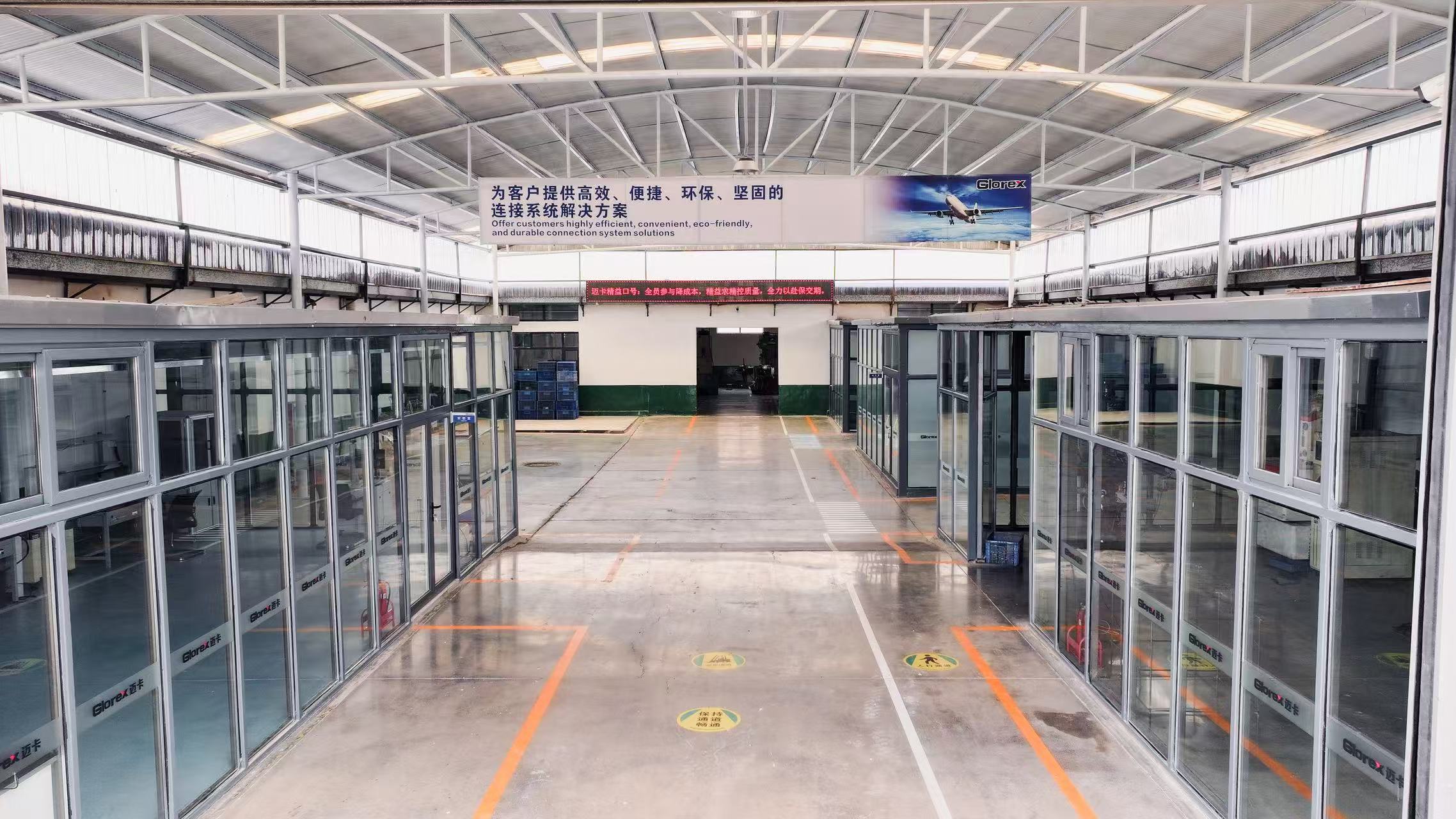
A factory with automated forming and welding usually has better batch-to-batch consistency. That matters when you are installing hundreds or thousands of clamps.
Common applications
Stainless steel V band clamps are used in:
Turbocharger to catalytic converter connections
Exhaust manifolds
Exhaust systems
DPF and emissions-related assemblies
Bulk material containers
Bypass filter units
Industrial pipe and flange connections
In each case, the clamp needs to match the flange and the environment. A clamp that works on a cold-side intake may not be the right choice for a hot exhaust joint.

Sourcing custom V band clamps from Glorex
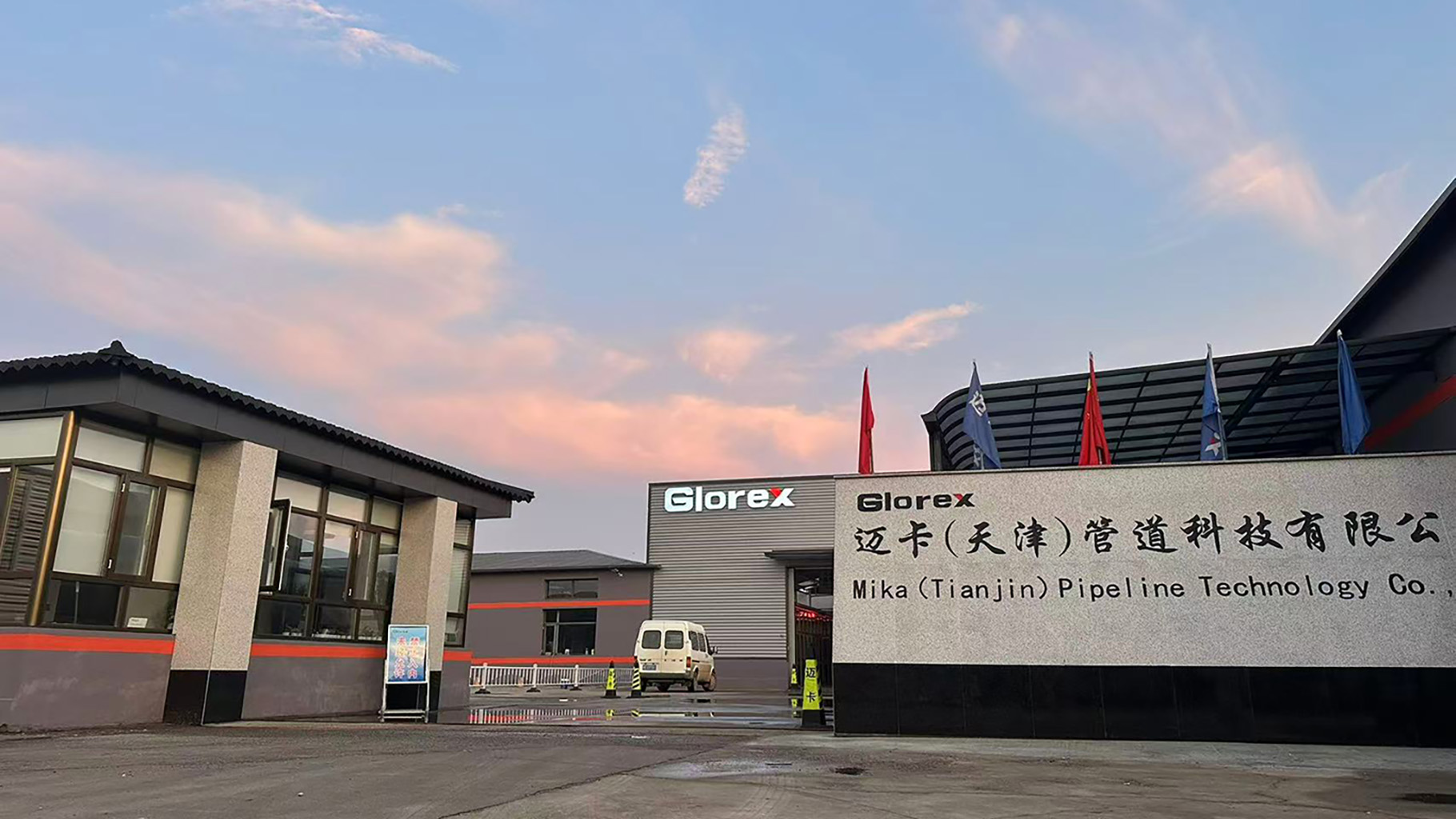
Glorex is a China stainless steel V band clamp manufacturer and factory. We produce custom V-band clamps with different profiles, widths, and closure types for exhaust, turbocharger, and industrial connections.
If you need a clamp that fits your flange instead of forcing a standard part to work, send your drawing or sample details here:
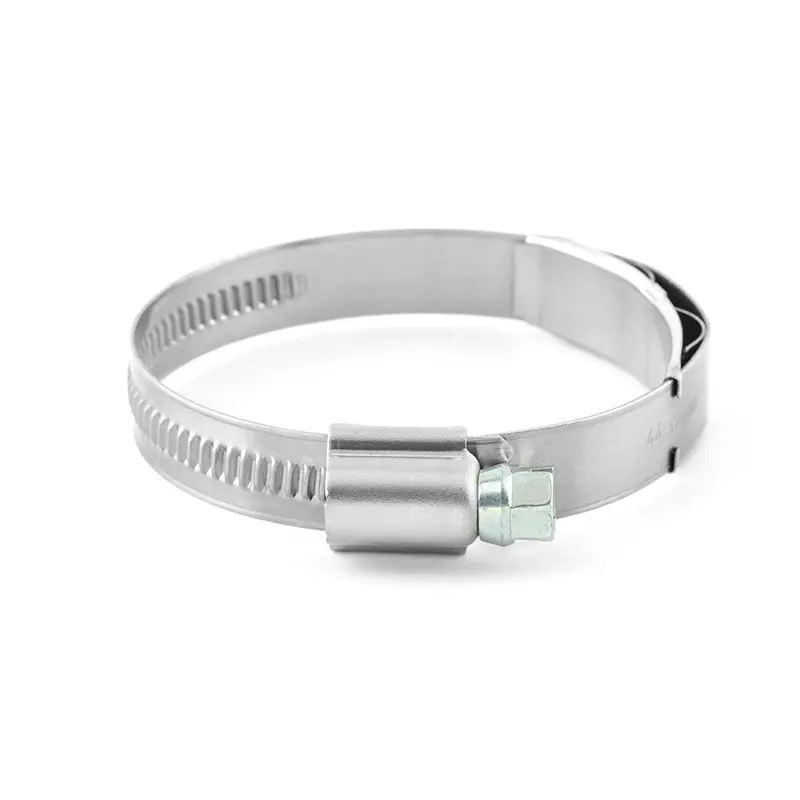
Stainless Steel V Band Clamp
Start with the flange and the material. Then confirm the clamp. That order saves time, returns, and a lot of unnecessary leak chasing.


FAQ
Are V band clamps reusable?
Usually yes, if the band is not stretched, cracked, or badly deformed. Inspect the threads and band before reuse.
What torque should I use?
There is no single universal torque. Follow the flange and clamp manufacturer’s recommendation. Over-tightening can distort the joint.
304 or 316 for an exhaust V band clamp?
304 is common for general exhaust. 316 is better for corrosive conditions. For high heat, 321 may be considered.
Can I mix brands of flanges and clamps?
It is possible, but not recommended unless the profiles are confirmed to match. Test a sample first.
How do I get a custom V band clamp?
Send a drawing or sample with dimensions, material, quantity, and application details. A manufacturer can then recommend the profile, width, and closure.
Hot Selling Products


Post time: Sep-15-2026


