



Introduction: The Backbone of Secure Connections
In demanding industries, the integrity of a wire rope termination is non-negotiable. Whether securing a vital lifting point in a construction site, rigging sails on a marine vessel, or creating a sleek, modern architectural railing, the choice of hardware is critical. Among the various options available, the stainless steel clip for wire rope stands out as a paragon of strength, longevity, and reliability. Unlike its carbon steel or galvanized counterparts, stainless steel offers a unique combination of clamping force and resistance to the elements, making it the preferred choice for engineers and safety professionals worldwide.
Why Choose Stainless Steel? The Material Advantage
The "stainless" in stainless steel comes from its chromium content, which forms a passive, invisible layer of chromium oxide on the surface. This layer prevents corrosion and rust, even when the clip is continuously exposed to moisture, saltwater, or chemicals. This makes the stainless steel wire rope clip an ideal component for several challenging applications:
Marine Environments: Docks, ships, and offshore platforms face constant salt spray. A standard clip would corrode in months, but stainless steel maintains its integrity for years.
Architectural & Cable Railing: Stainless steel's sleek, polished appearance complements modern design. It provides a clean, metallic finish that does not stain or degrade, ensuring the structure retains its aesthetic appeal.
Chemical & Food Processing Plants: In environments where hygiene and resistance to corrosive cleaning agents are essential, stainless steel hardware is mandatory.
Outdoor Applications: For any permanent outdoor structure, a stainless steel wire rope clip ensures that the termination will not be a point of weakness due to weather-related decay.

Understanding the Anatomy of a Wire Rope Clip
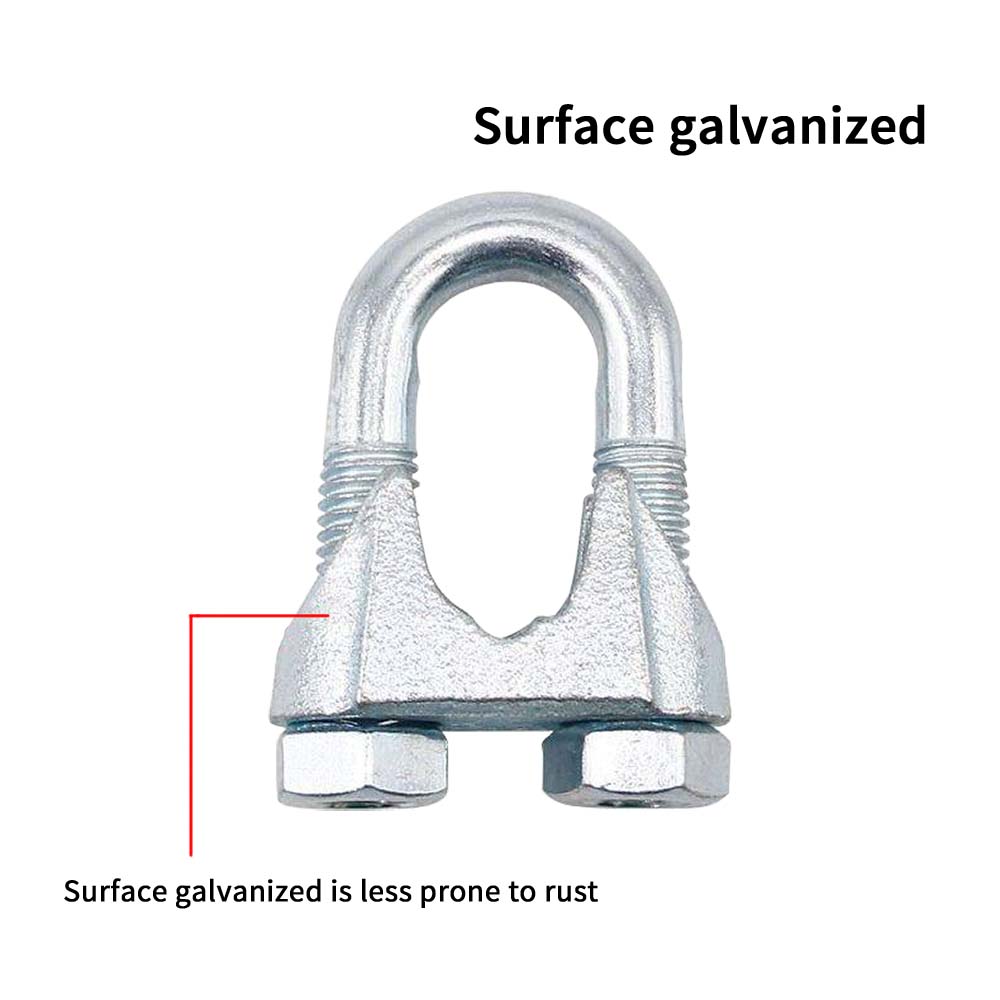
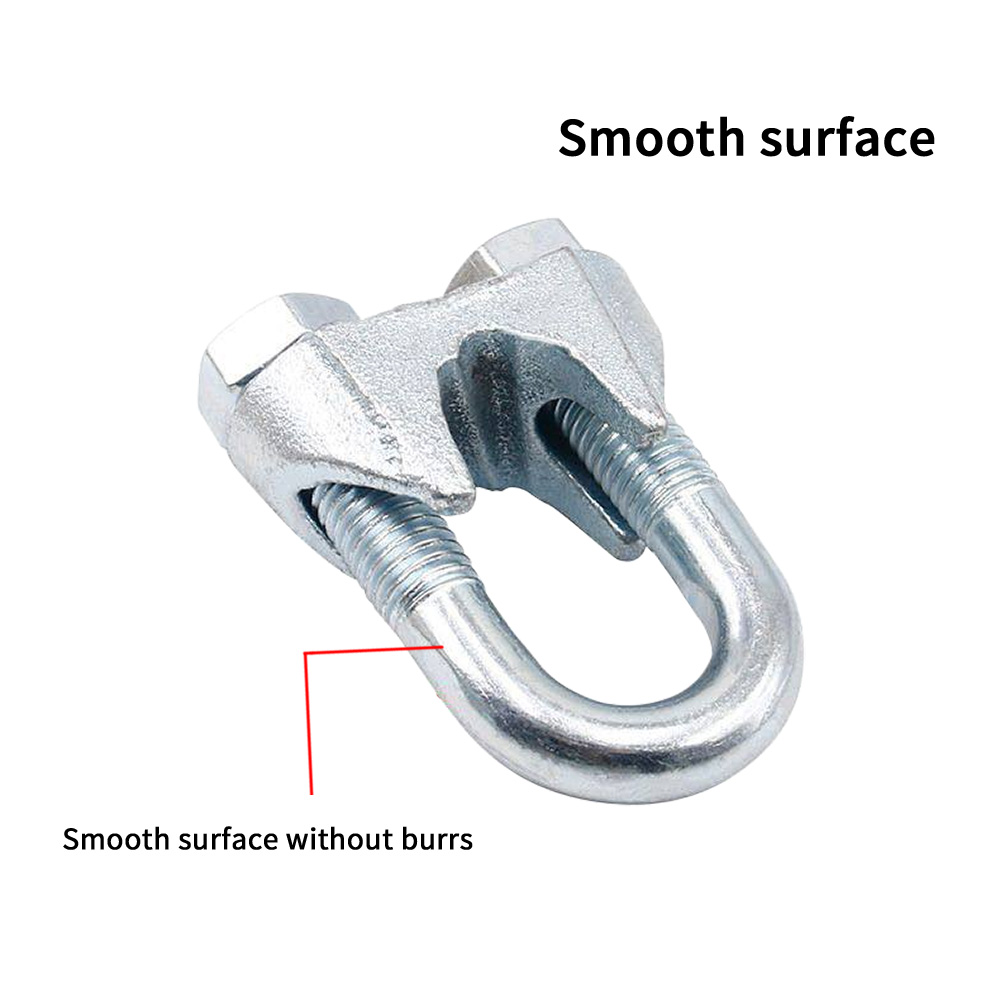
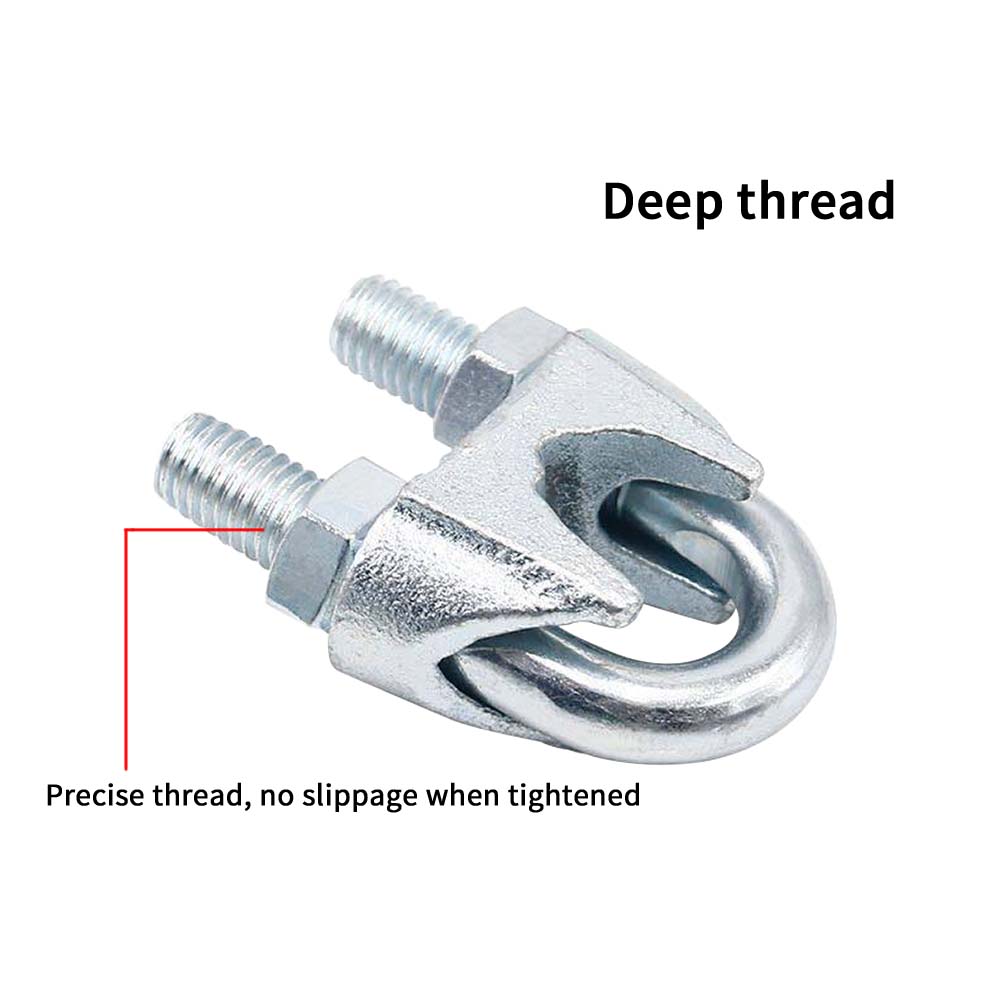
A typical wire rope u clamp consists of three key parts:
The U-Bolt: The curved section that fits over the "dead end" or the short, unused portion of the rope.
The Saddle: The curved base that fits against the "live end" or the load-bearing end of the rope. Crucial Note: The saddle is always placed on the live end, following the principle "Never saddle a dead horse." This ensures the maximum bearing surface supports the primary load, preventing deformation of the wire rope.
Two Nuts: These are torqued down to the specified foot-pounds to create the necessary clamping force.
Key Specifications and Load Capacities
Selecting the correct wire rope clip is a matter of matching the clip size and material to the rope diameter and the working load limit (WLL) of the application. A reputable heavy-duty stainless steel wire rope clip will be clearly stamped with the rope diameter it fits. It's crucial to never use a clip that is too small or too large for the rope.
Proper Fit: The U-bolt and saddle must seat correctly around the wire rope without forcing or leaving large gaps.
Torque Specifications: The strength of the connection relies heavily on the nuts being tightened to the manufacturer’s recommended torque. Under-tightening can cause slippage, and over-tightening can damage the rope.
Safety Factor: Always consider the design factor. For lifting applications, a 5:1 safety factor is standard, meaning the clip's breaking strength should be five times the maximum intended load.
Installation Best Practices for Longevity and Safety
Installing a stainless steel wire rope clamp requires attention to detail. The "Fist Grip" method, where multiple clips are used to create a loop, is a common termination technique. The number of clips and the spacing between them are critical for the assembly to achieve its full rated capacity.
A basic rule of thumb for spacing is that the distance between clips should be approximately six times the rope diameter. The first clip should be placed as close to the loop as possible. After the initial tightening, the entire assembly should be loaded and then the nuts should be re-torqued, as the wire rope will stretch and seat itself, reducing clamping force.

This link will direct you to a specific product that exemplifies the highest standards of manufacturing. These components are engineered for superior performance, ensuring your wire rope terminations are safe, secure, and built to last.
Maintaining Your Stainless Steel Hardware
While stainless steel is highly resistant to corrosion, it is not stain-proof. In harsh environments, it can benefit from occasional cleaning to remove surface contaminants that could potentially break down the protective oxide layer. A simple wash with mild soap and water and a soft cloth will help maintain the polished finish and long-term integrity of your stainless steel wire rope clip.
Conclusion
The stainless steel clip for wire rope is more than just a piece of hardware; it is a critical component in a safety system. Its selection, installation, and maintenance should be performed with the utmost care. By choosing a high-quality, genuine stainless steel clip, you are investing in the longevity, safety, and reliability of your wire rope systems. Trust in a reputable supplier to provide the durable, dependable hardware that your projects demand.


Glorex: Your Source for Premium Rigging Hardware
When sourcing hardware for critical applications, quality and consistency are paramount. You need a supplier you can trust to provide materials that meet strict manufacturing standards.
Their inventory includes a variety of clips designed to meet diverse industrial requirements, ensuring you find the exact component for your project’s needs. For a prime example of their quality engineering, explore their range of heavy-duty clamps, which are designed for exceptional durability and performance.
Media Contact:
Glorex Sales Department
Email: cathy@mikaclamp.com
Phone: 0086-18322014703
Website: https://www.glorexclamp.com


Hot Selling Products


Post time: Jul-16-2026


