



Let’s be honest: most worm‑drive hose clamps are fine – until they’re not. You torque them down, the housing tilts slightly, and suddenly the band digs into the hose at an angle. A few heat cycles later, you’ve got a weepy coolant joint or, worse, a cut silicone elbow that blows off under boost. That’s exactly why the DIN3017 Germany Type eccentric hose clamp exists – to fix the tilt problem.
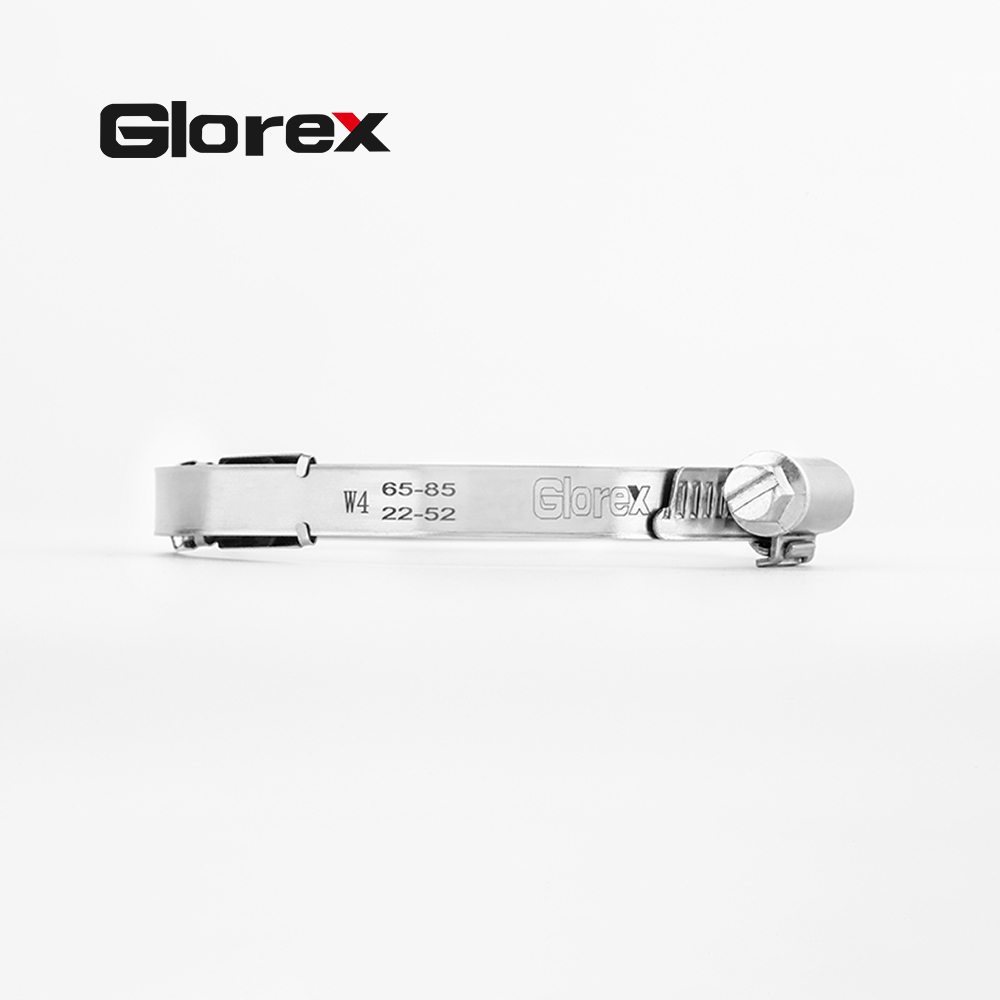
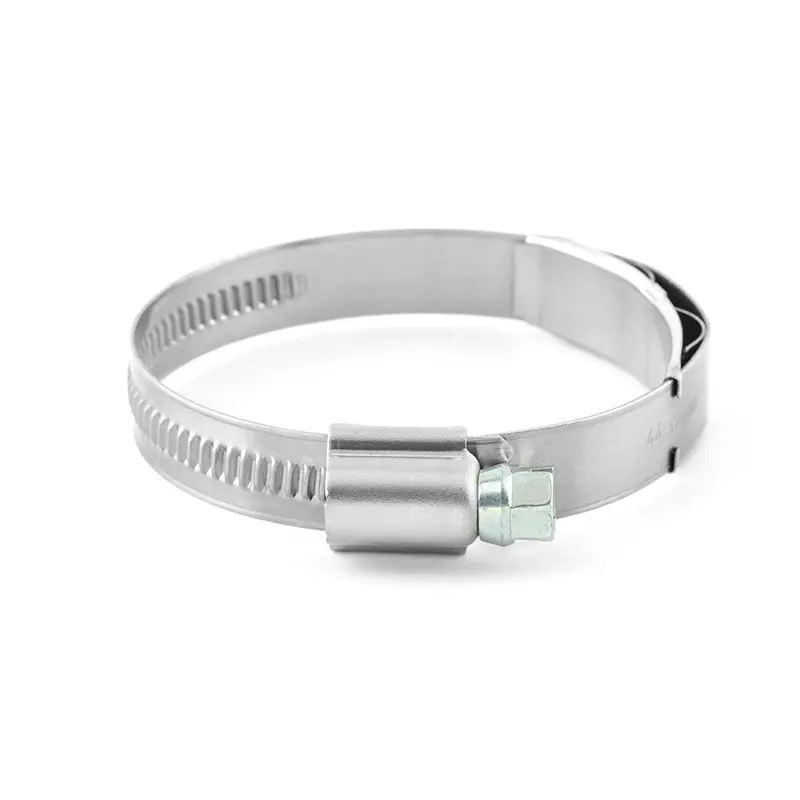
If you’ve ever worked on a modern turbocharged engine or a high‑vibration industrial skid, you know that clamping force needs to be dead‑level. The German standard DIN3017 addresses this with an asymmetric connection sleeve and a convex arc structure on the shell. Instead of the housing cocking to one side as you tighten, the design pulls the band down evenly around the full circumference. The result? A flush sealing ring that doesn’t pinch, doesn’t cut, and doesn’t loosen after a few heat‑soak cycles.
What Makes the Eccentric Design Different
I’ll spare you the overly technical jargon, but here’s the core difference. On a standard worm clamp, the screw is centred in the housing, which means as you crank it, the housing tends to rotate slightly, shifting the band’s pressure to one edge. The DIN3017 clamp moves the screw off‑centre – hence "eccentric" – and uses a short, side‑riveted connection sleeve. That sleeve, combined with a reinforced hoop shell, acts like a self‑aligning mechanism. When you hit the recommended 3–4 Nm of torque, the band stays perfectly perpendicular to the hose.
I’ve tested this back‑to‑back on a 2.5” silicone coupler under 20 psi of boost. The universal clamp left a visible indentation on one side; the DIN3017 left a uniform, light impression with no rubber displacement. That’s the kind of detail that separates a clamp you trust from one you replace every season.
Material Choices
These SS Hose Clamps come in two primary stainless grades: SS304 and SS430. Here’s how I decide which to use:
SS304 – This is my default for anything near moisture, road salt, or chemical washdown. It’s the more corrosion‑resistant option, and it handles the under‑hood condensation and occasional coolant splash without rusting. If the clamp lives outdoors or on marine gear, go 304.
SS430 – Higher tensile strength than 304, but slightly less rust resistance. It’s a cost‑effective pick for dry interiors, like HVAC ducts or air compressor lines, where strength matters more than salt‑spray performance. It’s also magnetic, which some shops like for quick ID.
The band, shell, and screw can be mixed – you’ll see combinations like 430 band with 300 shell – but I personally prefer all‑304 for peace of mind. The screw is often galvanised iron on lower‑tier versions, but full‑stainless is available if you ask.
Sizes, Bands, and Torque – What You Actually Need
The DIN3017 range here covers diameters from 8mm up to 200mm, with both 9mm and 12mm band widths. The wider 12mm band is a lifesaver for soft rubber or silicone because it spreads the load over a larger area, reducing the risk of cutting. For rigid plastic or metal pipes, 9mm is plenty.
One thing I appreciate is the clear torque spec: 3–4 Nm recommended, with a minimum destructive torque of 6–8 Nm. That gives you a healthy safety margin – you won’t snap the band before you’ve even reached a proper seal. I usually tighten by hand until snug, then use a small torque wrench for the final quarter‑turn, especially on critical cooling lines.


Where This Stainless Steel Hose Clamps Belongs
While you can use it anywhere you’d use a standard clamp, it really earns its keep in three specific spots:
Radiator and heater hoses – Plastic inlet/outlet necks are fragile. The even clamping force prevents cracking from stress concentration.
Turbo intake and intercooler pipes – Boost pressure and heat cycles cause expansion and contraction. The eccentric design maintains constant tension without loosening.
Tight engine bays – The short housing sleeve fits where longer worm‑drive bodies simply won’t clear adjacent components.
I’ve also seen these used on marine diesel cooling systems, agricultural sprayers, and even dust extraction ducting – anywhere a consistent, leak‑free seal matters more than saving a few cents per clamp.

A Few Installation Tips from the Workshop
Cut the hose cleanly – A ragged end will always leak, no matter how good the clamp is.
Position the clamp 5‑10mm from the hose end – Right over the bead or barb of the fitting.
Lubricate the screw threads – A drop of anti‑seize or light oil makes torque application smoother and prevents galling on stainless threads.
Re‑torque after the first heat cycle – Hoses settle, and that initial 3 Nm might need a slight nudge after they’ve warmed up and cooled down.


Where to Find the Real DIN3017 Spec
I’ve been sourcing these from Glorex (manufactured by Mika Tianjin) for a couple of years now. Their clamps are stamped with the DIN3017 reference, and the side‑riveted shell is consistent across batch sizes – which tells me their tooling and quality control are on point. They offer the full range from 8‑12mm up to 180‑200mm, and you can choose either 304 or 430 stainless.
If you’re tired of chasing leaks or replacing chewed‑up hoses, it’s worth taking a closer look:
DIN3017 Germany Type Eccentric Hose Clamp – Full Size Range


Hot Selling Products


Post time: Aug-03-2026


