

W4 Stainless Steel Double Wire Hose Clamps in 201 or 304
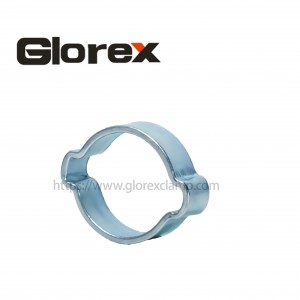
Double Hose Clamp Design
Most clamp enquiries start with size. With stainless, they should start with grade. We stock this clamp in two austenitic stainless steels, 201 and 304, and the difference between them decides how long the joint survives in your plant — not whether it seals on day one. Both grades use the same double wire loop, the same plate and the same screw thread, so the clamp behaves identically at installation. What separates them is what happens six months later, on a wet line or a coastal site.
Difference Between 201/304 Materials for Double Wire Hose Clamp
| W4 Property | 201 | 304 |
|---|---|---|
| Typical composition | ~16–18% Cr, 3.5–5.5% Ni, 5.5–7.5% Mn | ~18% Cr, 8–10.5% Ni |
| Nickel strategy | Manganese partly replaces nickel | Higher nickel content |
| Relative material cost | Lower, less exposed to nickel price swings | Higher and more volatile |
| General corrosion resistance | Adequate in dry, indoor, low-chloride conditions | Noticeably stronger in humid and chloride-bearing service |
| Pitting / crevice risk | Higher once chlorides are present | Lower |
| Magnetism after cold working | Becomes noticeably magnetic | Weakly magnetic at most |
| Typical fit | Indoor ducting, cable bundling, dry air lines | Irrigation, washdown, coastal, cooling water, marine |
The short version: 201 buys you stainless appearance and reasonable indoor durability at a lower and more stable price. 304 buys you margin against water, salt and time.
Double Wire Hose Clamp Advantages
201 Double Wire Hose Clips
201 Wire Hose Clamp performs excellently in dry environments and can effectively reduce landed costs in mass production.
It is the correct choice for ventilation ducting indoors, cable and conduit bundling in sheltered plant rooms, dry compressed air lines, indoor cabinet and panel work, and any assembly that ships indoors and never sees condensation. If the clamp lives in a warehouse, a heated factory hall or a dry vehicle interior, 201 does the job and the savings are real.
What 201 does not tolerate well is standing water, salt spray, fertilizer runoff, chlorinated washdown or repeated condensation cycles. Put it in those conditions and you will see tea-staining first, then pitting at the wire contact points, then a clamp that has lost section thickness exactly where the load is carried.
301 Wire Type Hose Clamps
Move the same clamp outdoors, near the coast, into a washdown bay, onto an irrigation manifold or into a cooling loop, and the calculation changes. 304's higher nickel content gives it the passive layer stability that chlorides attack. That is not marketing language — it is the difference between a clamp that still holds torque after two seasons and one that has to be replaced.
Specify 304 for irrigation and fertigation lines, coastal and offshore installations, food and beverage washdown areas, marine and shipboard hose, cooling towers and chiller connections, and anything carrying water that has been chlorinated or treated. If the joint is difficult to reach for maintenance, the case for 304 gets stronger, because the cost of a return visit dwarfs the price difference on the part.


Double Clamps For Pipe Sealing
Grade gets the headlines, but finish decides whether the wire cuts the hose. Our wire ends are dressed so they do not stand proud of the loop, and the plate edges are deburred. On soft silicone or thin-wall PE, that finish matters more than the alloy behind it.
Both grades are supplied in their natural pickled or bright finish as standard. If you need a specific appearance for a visible installation, say so at enquiry stage — passivation and specific surface treatments are quoted per order rather than assumed.
Wire Clamp Showcase


Wire Pipe Clamp Specification
| Wire dimeter | Size | Screw size | Pcs/Bag | Pcs/Carton | Carton size(cm) |
| 1.5mm | 11-14mm | M5*30 | 50 | 1000 | 32*27*14 |
| 1.5mm | 13-16mm | M5*30 | 50 | 1000 | 32*27*14 |
| 1.5mm | 15-18mm | M5*30 | 50 | 1000 | 32*27*14 |
| 1.8mm | 17-20mm | M5*30 | 50 | 1000 | 32*27*14 |
| 1.8mm | 19-22mm | M5*30 | 50 | 1000 | 38*27*17 |
| 1.8mm | 20-24mm | M5*30 | 50 | 1000 | 38*27*17 |
| 1.8mm | 22-26mm | M5*30 | 50 | 1000 | 38*27*17 |
| 1.8mm | 24-28mm | M5*30 | 50 | 1000 | 38*27*17 |
| 2.2mm | 26-30mm | M6*40 | 50 | 500 | 38*27*19 |
| 2.2mm | 28-32mm | M6*40 | 50 | 500 | 38*27*19 |
| 2.2mm | 31-35mm | M6*40 | 50 | 500 | 38*27*24 |
| 2.2mm | 34-38mm | M6*40 | 50 | 500 | 38*27*24 |
| 2.2mm | 35-40mm | M6*40 | 50 | 500 | 38*27*24 |
| 2.2mm | 37-42mm | M6*40 | 50 | 500 | 38*27*24 |
| 2.2mm | 40-45mm | M6*40 | 50 | 500 | 38*27*24 |
| 2.2mm | 43-48mm | M6*50 | 50 | 500 | 38*27*34 |
| 2.2mm | 45-50mm | M6*50 | 25 | 500 | 38*27*34 |
| 2.2mm | 47-52mm | M6*50 | 25 | 500 | 38*27*34 |
| 2.2mm | 50-55mm | M6*50 | 25 | 500 | 38*27*34 |
| 2.2mm | 53-58mm | M6*50 | 25 | 250 | 38*27*19 |
| 2.2mm | 55-60mm | M6*60 | 25 | 250 | 38*27*19 |
| 2.2mm | 54-62mm | M6*60 | 25 | 250 | 38*27*24 |
| 2.2mm | 60-65mm | M6*60 | 25 | 250 | 38*27*24 |
| 2.2mm | 63-68mm | M6*60 | 25 | 250 | 38*27*29 |
| 2.2mm | 65-70mm | M6*70 | 25 | 250 | 38*27*29 |
| 2.2mm | 70-75mm | M6*70 | 10 | 250 | 38*27*34 |
| 2.2mm | 75-80mm | M6*70 | 10 | 250 | 38*27*34 |
| 2.5mm | 80-85mm | M6*70 | 10 | 250 | 38*27*34 |
| 2.5mm | 84-90mm | M8*70 | 10 | 250 | 38*27*34 |
| 2.5mm | 89-95mm | M8*70 | 10 | 250 | 38*27*34 |
| 2.5mm | 94-100mm | M8*80 | 10 | 250 | 38*27*34 |
| 2.5mm | 98-105mm | M8*80 | 10 | 250 | 38*27*34 |
| 2.5mm | 103-110mm | M8*80 | 10 | 250 | 41*32*31 |
| 2.5mm | 108-115mm | M8*80 | 10 | 250 | 41*32*31 |
| 2.5mm | 113-120mm | M8*80 | 10 | 250 | 41*32*31 |
Because the geometry is identical across grades, you can run 201 on an indoor line and 304 on the outdoor section of the same system without changing tooling, torque settings or spares. Mixed-grade orders are packed and labelled separately so the two do not get confused on the shop floor.
Double Wire Spring Clips Application


W4 all-stainless double wire clamps go where plated steel will not last: irrigation manifolds and fertigation lines, cooling tower and chiller connections, washdown bays, coastal and shipboard hose, and outdoor drainage runs. The same clamp also suits automotive intake and coolant hoses where moisture is constant, and ventilation ducting in humid plant rooms. If the joint sees water, salt air or cleaning chemicals and is awkward to reach again, this is the grade to fit.
Hose Clamp Custom Packaging


About Us


We are a Tianjin-based manufacturer of pipe clamp products, trading under the Glorex brand. Tianjin sits on China's northern coast as one of the four municipalities, at the maritime end of the Belt and Road routes, and the city is officially designated an international integrated transport hub. For buyers this is practical rather than poetic: Xingang and Dongjiang terminals and Tianjin Airport are all within our normal dispatch routine, so a stainless order does not sit waiting for a forwarder.
The team is close to 100 people — fifteen in pre-sales and after-sales, eight technicians of whom five are senior engineers. Those eight are who you reach when a grade question needs a technical answer instead of a price list. Our clamps serve automotive, military, air intake, exhaust, cooling and heating, irrigation and industrial drainage applications, and the requirement underneath all of them is the same: no leaks, and no surprises after installation.
We work plainly. Grade and certificate are stated on the paperwork, dimensions are checked before packing, and we stay reachable once the container has left.


Certificate


FAQS
In dry indoor service, yes. 201 holds up in ventilation ducting, cable bundling, dry air lines and sheltered plant rooms. It is not suited to standing water, salt air, washdown or chlorinated water, where pitting will appear at the wire contact points.
Answer two questions: will the clamp see water or chlorides, and how hard is it to reach for replacement? Dry and accessible points to 201. Wet, coastal, washdown or hard-to-reach points to 304.
Yes, and many customers do — 201 on indoor runs, 304 on the outdoor or wet section. The two share the same geometry, so torque settings and tooling stay the same. We pack and label the grades separately to avoid mix-ups on site.
For splash and occasional salt exposure, 304 is a reasonable step up from 201. For continuous immersion or heavy salt spray, 316 is the correct grade and we will say so rather than sell you 304 for a job it will not hold.
Not meaningfully at installation. Both grades use the same wire diameter and screw for a given size. What changes is how the clamp performs over time in a corrosive environment, not how it closes on day one.